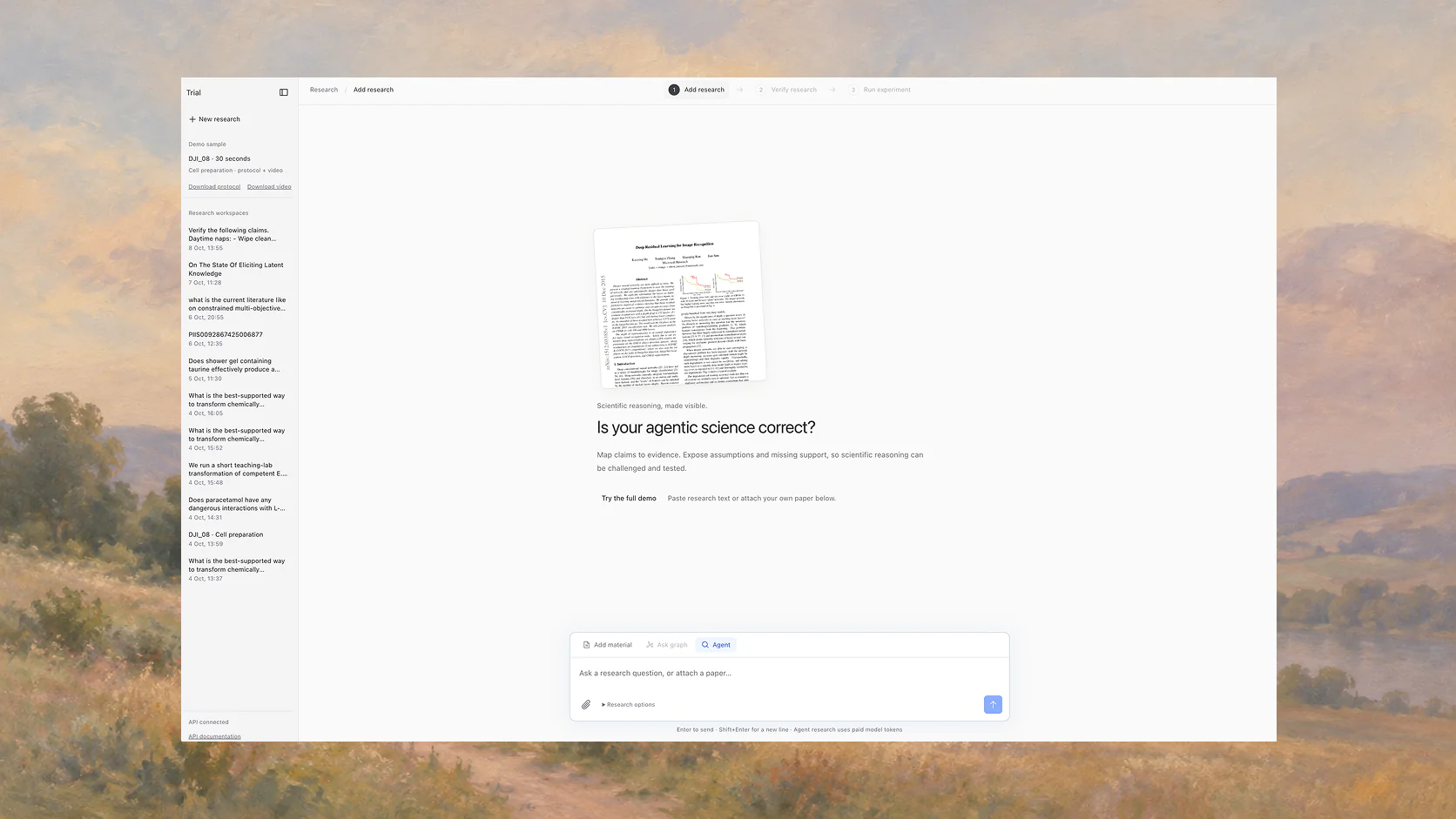
Can a research agent catch itself being wrong?
That question pulled us towards Track 2, Originator, at the London AI x Science Hackathon, held on 3–4 October 2026. The weekend opened Deep Tech Week London, with sponsors including Anthropic, Google DeepMind and Hugging Face. Other tracks explored algorithm discovery with Cambridge Compute Co. and AIDDA Institute, protein design with Serova, and materials manufacturing with Polaron.
Originator's brief asked for scientific agents that recognise uncertainty and catch reward hacking. It gave us an interesting design problem: what happens when the agent trying to build an argument has to face another agent trying to pull it apart? We could work across scientific subjects while tackling something they share: the distance between a convincing explanation and evidence that holds up.
We built Trial around that tension, then followed it out of the papers and onto the lab bench.
First, give the argument somewhere to stand
Research can begin with papers you already have or a question you ask an agent to investigate. Trial turns uploaded material into claims linked to source passages; the research agent can search for more literature and add its findings to the same argument graph. You can follow a conclusion back through its premises and ask what it depends on.
A separate critic checks those connections for gaps, contradictions and unsupported leaps. Before an agent answers, an independent guard examines the cited evidence against fixed criteria. The answer can remain conditional, stay a hypothesis, or be withheld. The useful moment is when an objection changes what the agent is willing to claim.
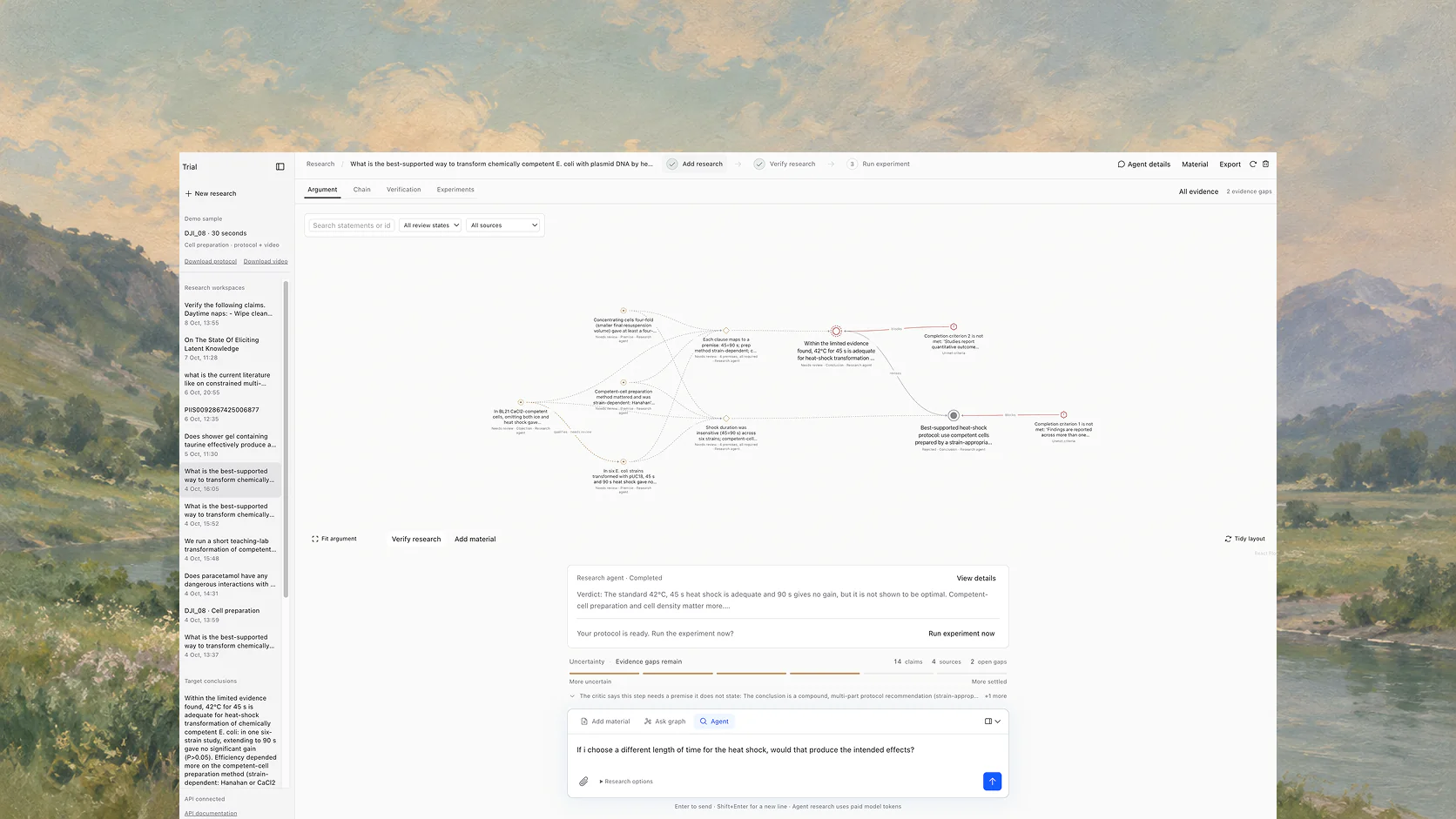 Claims, source passages and reasoning meet in Trial's argument graph.
Then the experiment has to happen
A sound argument still leaves the difficult, physical part of science: carrying out the method. A step can look perfectly clear in a paper and become much less clear in a recording of somebody doing it.
Trial carries the research into a step-by-step protocol, then uses computer vision to inspect an experiment video against it. Highlighted sections, captions and a timeline connect each finding to the relevant footage. You can move between the instruction, the observed action and the evidence for a deviation.
This was the part I worked on: making the comparison useful without pretending the camera sees everything. Visible actions can support a finding; unreadable labels and steps outside a partial recording stay uncertain. Following the observable procedure does not, by itself, establish that the science has been reproduced.
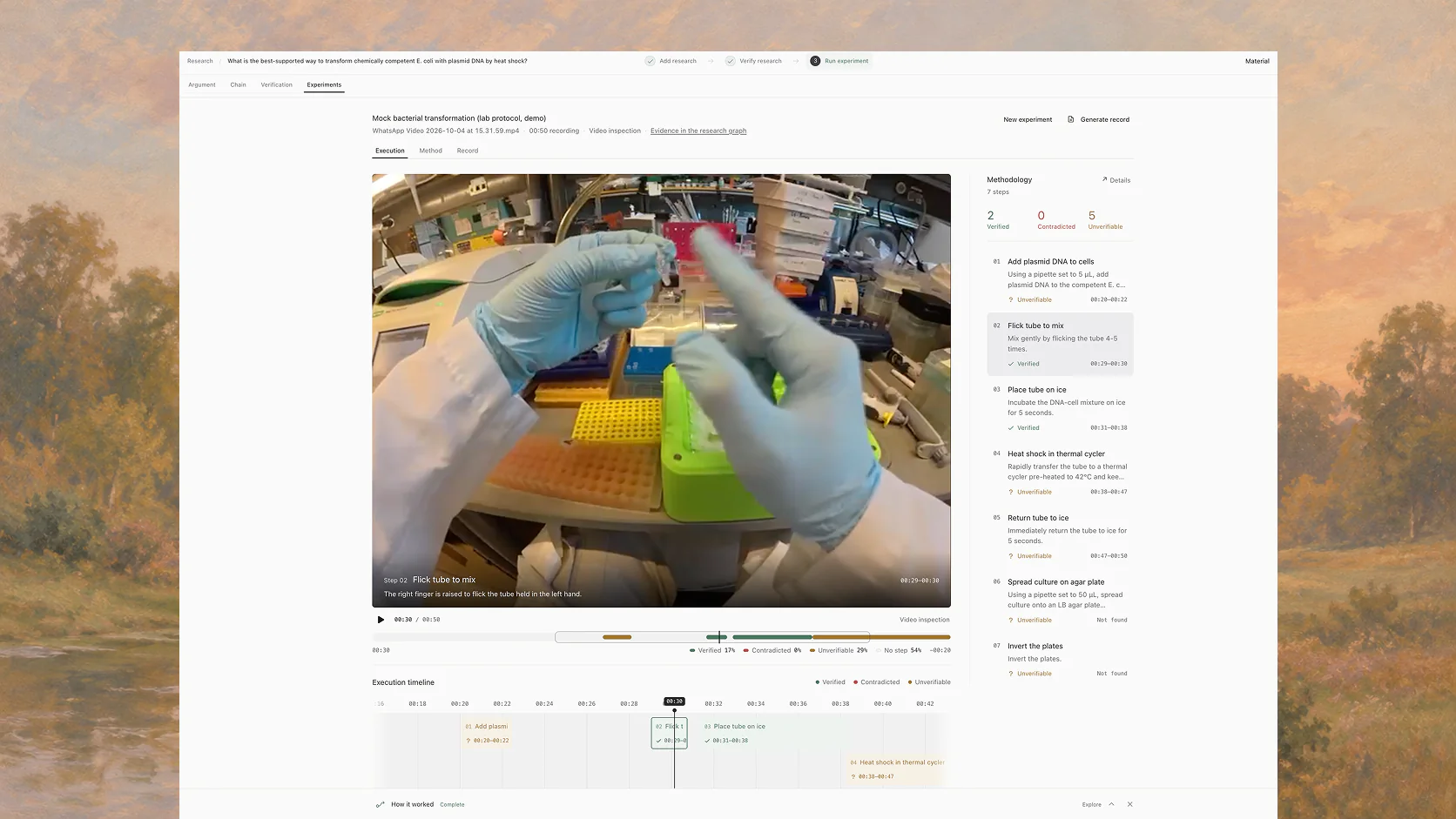 The experiment view links protocol checks to highlighted, timestamped video evidence.
Leave a record someone else can inspect
The final output is a machine-readable JSON record alongside a printable report. It preserves the protocol, observations, timestamps, findings and evidence limits, with content hashes that let someone check the record's integrity. The uncertainty travels with the result instead of being lost in a tidy summary.
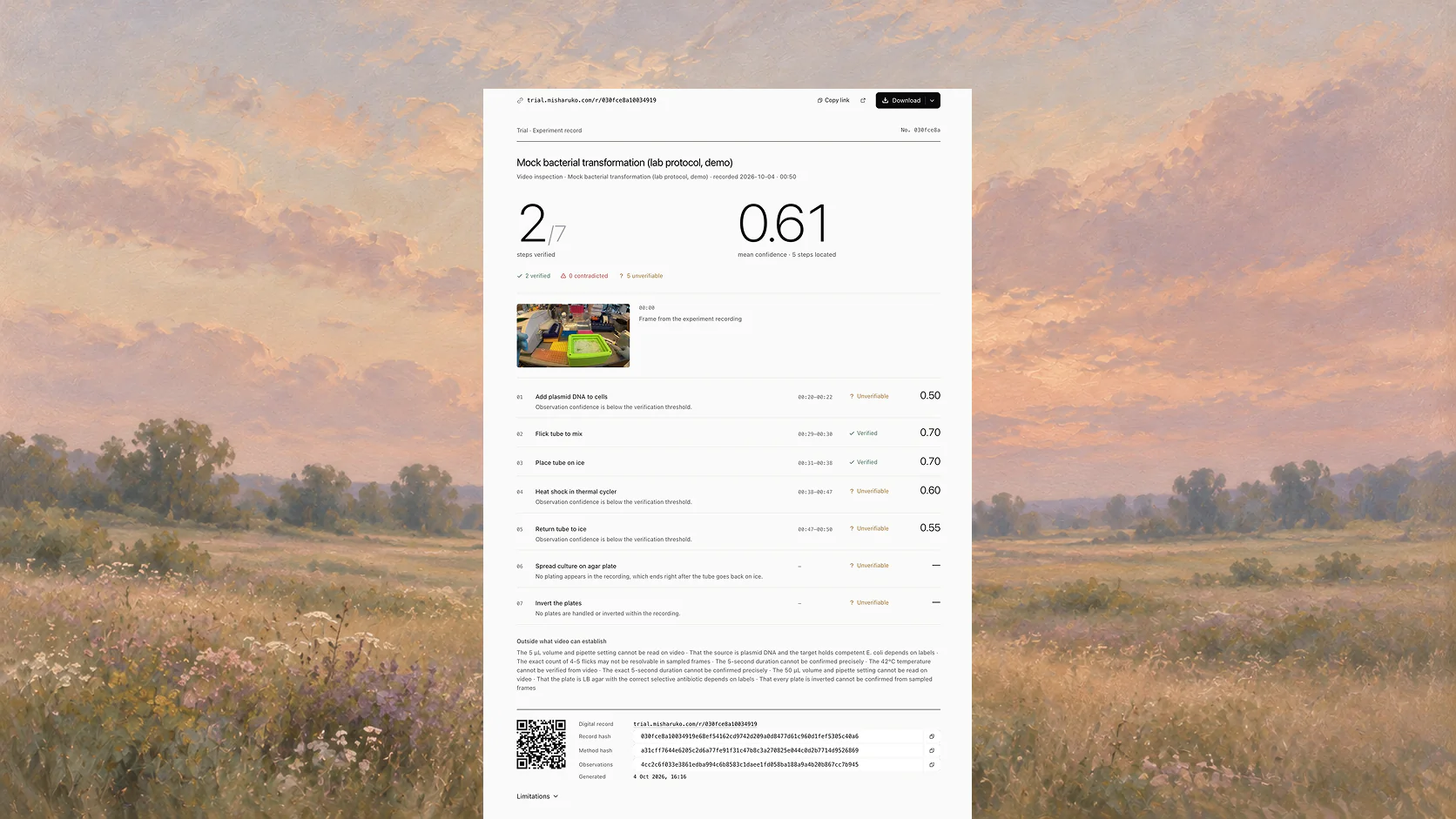 A reviewable experiment record keeps findings and their supporting evidence together.
How did we do?
Our team reached the finals in the most popular track, placed 2nd in our track, and demonstrated Trial live to 200+ people in a pretty cool church in the centre of the city.
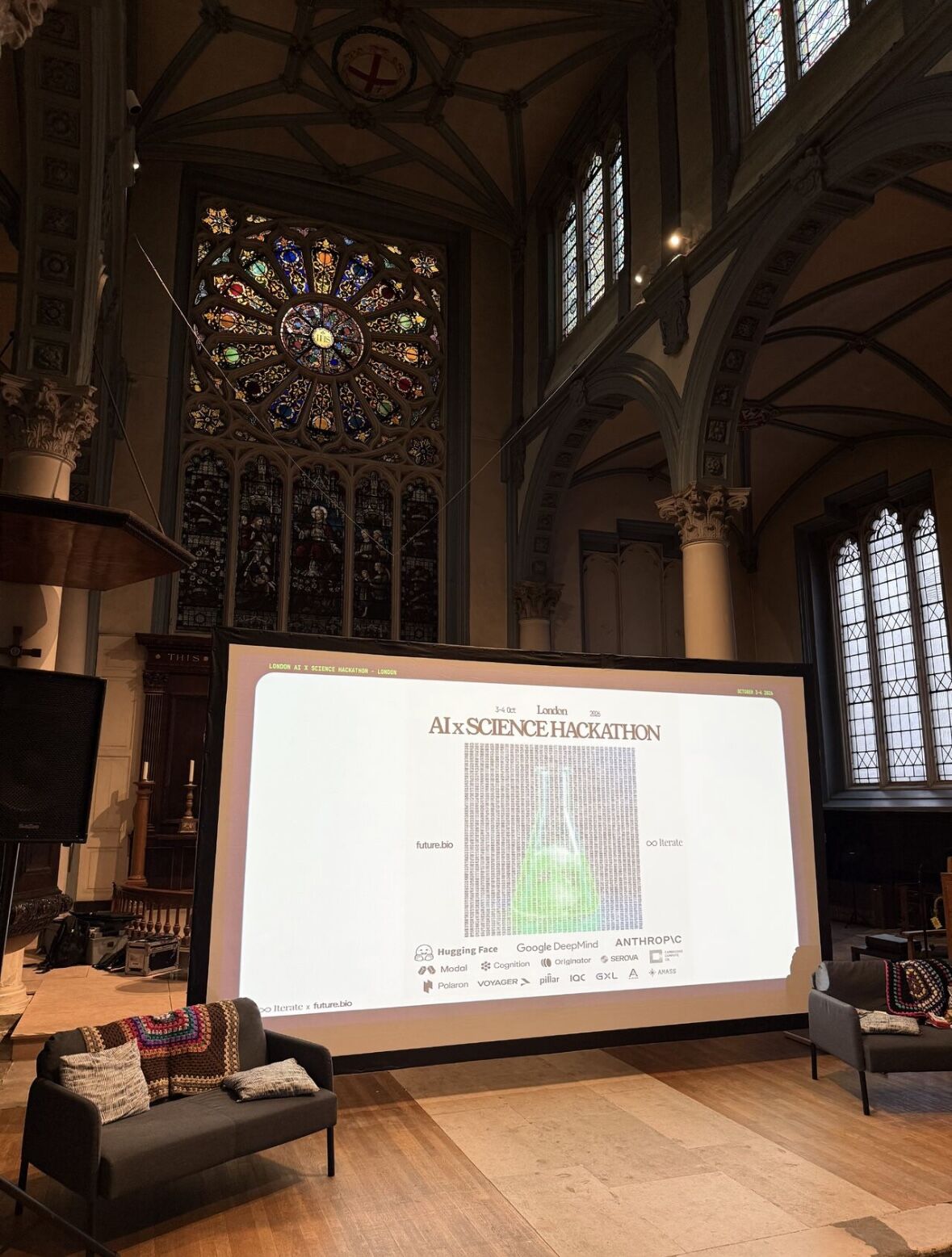 Final demo location