
Ideas often die in browser tabs
A new idea can disappear into twenty open tabs before it has a name. Domain searches lead to social checks, social checks lead to spreadsheets, and the energy that made the idea exciting gets spent on setup. Hatch is for that fragile interval.
Describe the business once and Hatch turns the early admin into a guided path: explore names, compare availability, keep decisions together, and see the next setup step. It does not promise to invent a company. It protects enough momentum for someone to begin one.
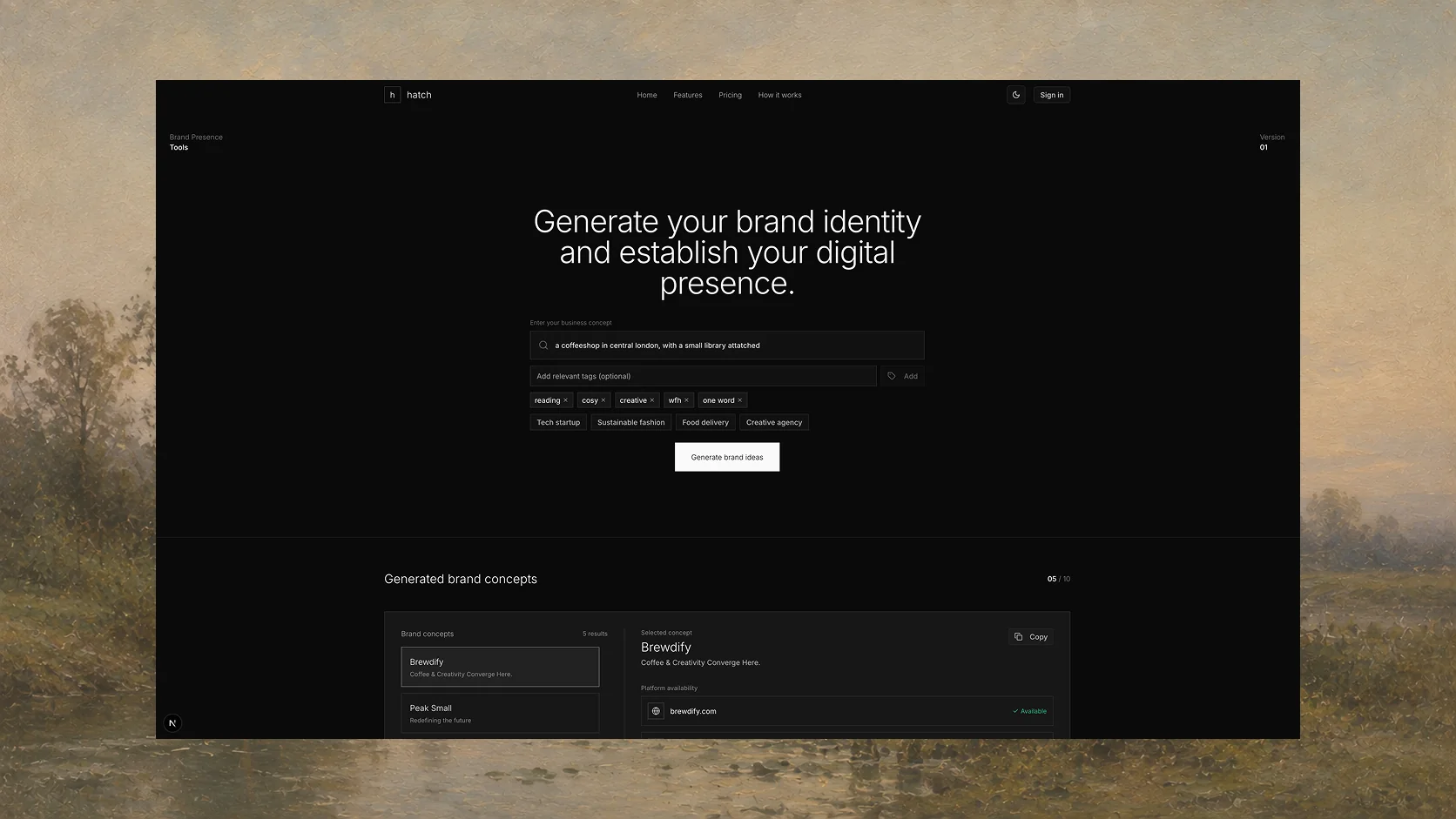 The Hatch homepage turns an early business idea into a clear place to begin.
Stack
Next.js and TypeScript power the product; Prisma and PostgreSQL store businesses, generated directions, platform checks, and setup progress; NextAuth handles identity. LLM generation is one service inside the flow, not the architecture of the whole application.
Guidance without a magic-answer machine
A rough business description becomes a constrained shortlist, not an infinite wall of generated names. Options can be rejected, saved, compared, and refined before handle checks run across the relevant platforms. The user remains the editor; the model creates useful directions.
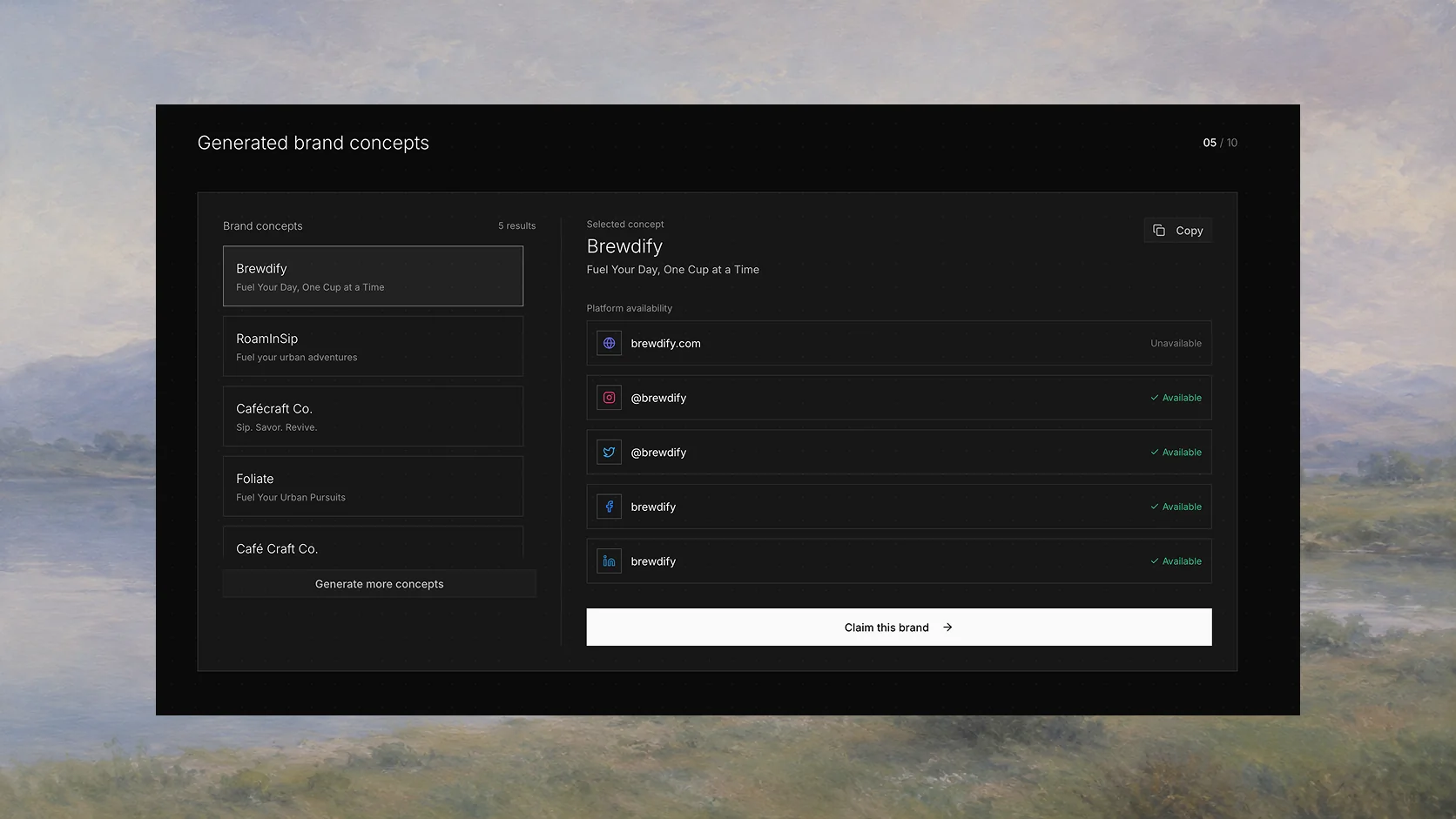 Generated directions are presented for comparison and refinement rather than as a final answer.
Once a direction is chosen, Hatch turns it into a compact setup plan: which accounts matter, which details should stay consistent, and what needs to exist before launch. Each completed decision closes an open loop rather than creating another dashboard to maintain.
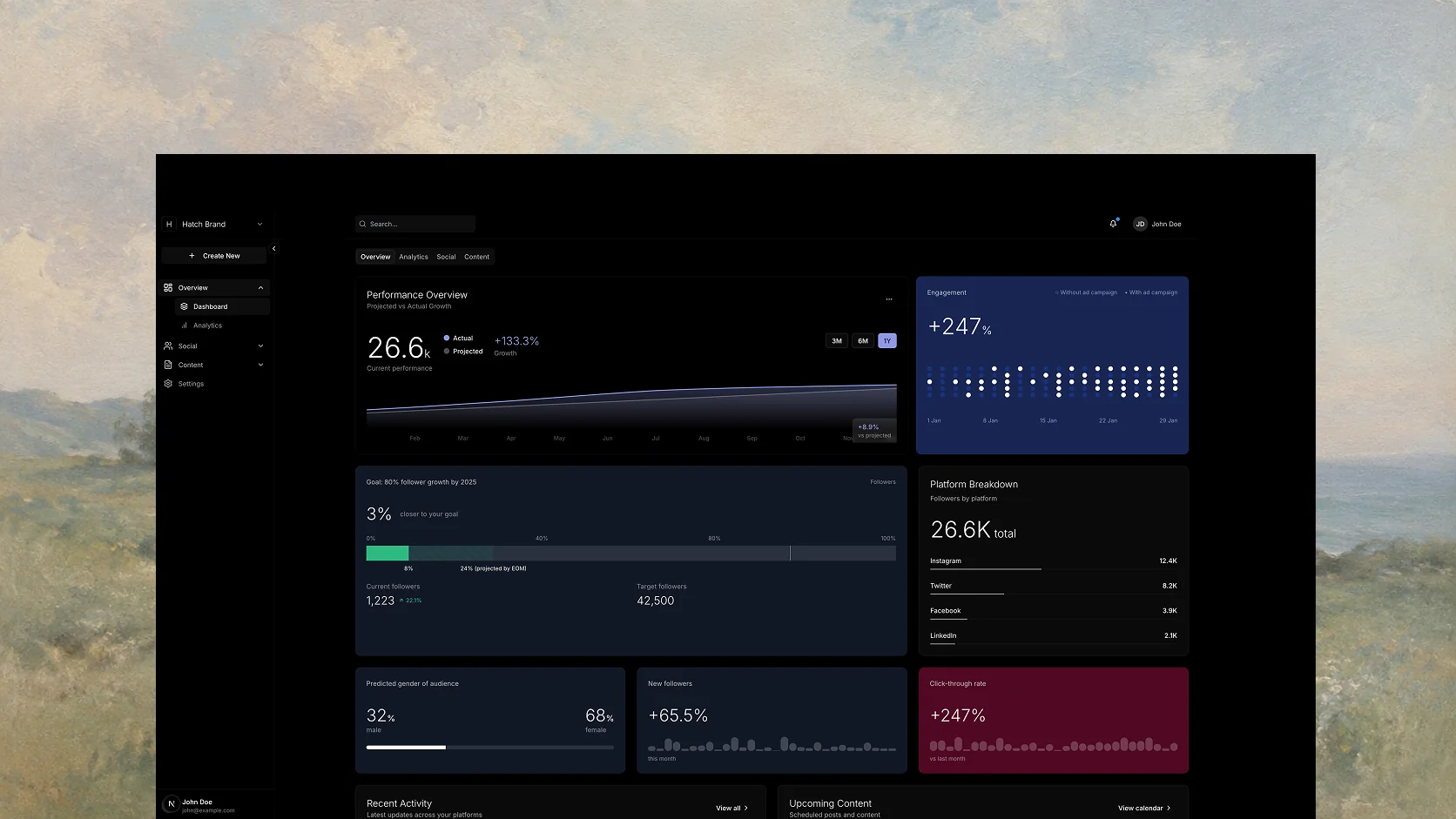 The product dashboard keeps launch decisions and remaining setup work together.
AI and platform checks
Prompt constraints give the model enough context to produce relevant directions, while the interface makes every output disposable, comparable, and revisitable. Results are stored so refinement does not erase useful earlier thinking.
Availability checks are separate from generation. That boundary keeps the interface responsive and contains rate limits, partial failures, or changing third-party responses. One slow platform should not make all the other progress disappear.
 Launch features are organised around practical progress instead of more generated output.
The boundary for what comes next
Scheduling, lightweight analytics, consistency checks, and practical content prompts could extend the launch. The boundary matters, though: Hatch should remove setup work, not become an AI theatre that delays the real business in a new way.
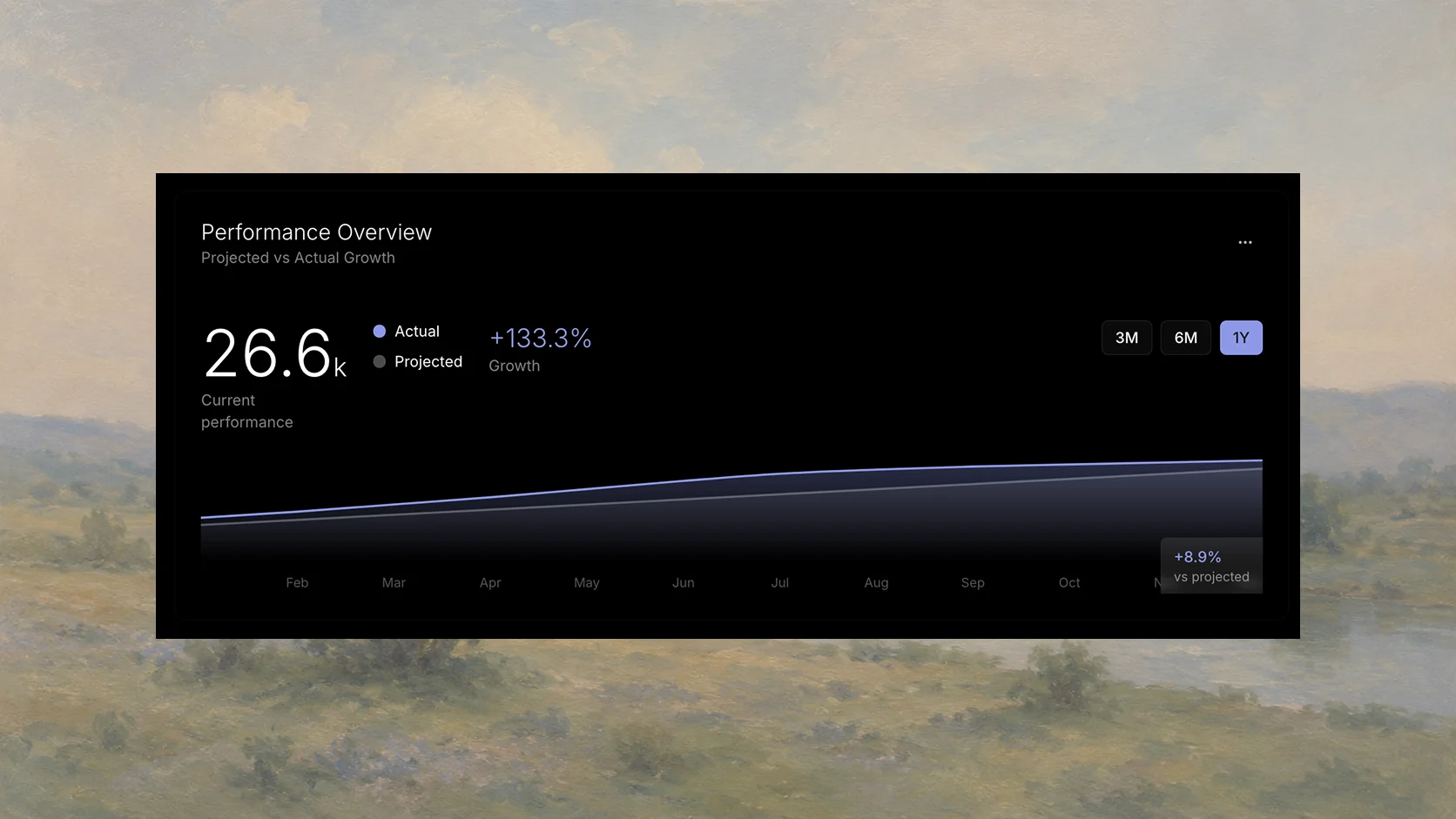 Growth tools are treated as a continuation of the launch workflow, not a separate product.